Breadcrumbing usually stabilizes them, not the relationship
The pattern often gives the ex reassurance, attention, or emotional access without forcing a real change in the structure between you.
The message can be warm and still leave you in the same place. Read the contact that follows it: clear plans, answered questions, follow-through. A longer history helps you see whether this is a new conversation or the same loop again.
By Layne Weant
Published
Updated
The pattern often gives the ex reassurance, attention, or emotional access without forcing a real change in the structure between you.
The disappearing act is not separate from the warm message. It is often the clearest part of the pattern.
Some breadcrumbing messages are emotionally genuine in the moment. They still fail the test of durable accountability and sustained effort.
Breadcrumbing often sounds affectionate, nostalgic, or curious. The message itself can feel soft and meaningful. The problem shows up when the pattern repeats: low-stakes warmth, little movement, then silence again once the emotional contact has been restored.
That is why screenshot-only interpretation fails here so often. A single message can look loving. The full sequence is what reveals whether the relationship is actually moving anywhere.
Slow repair can still be real if it carries ownership, steadier pacing, and increasing tolerance for direct conversation. Breadcrumbing usually resists that kind of structure. It keeps things emotionally open while staying strategically vague.
Grey Mirror is useful because the difference tends to appear in repeated behavior, not in one especially tender line.
Breadcrumbing is difficult because it keeps delivering small amounts of hope. Intermittent warmth can hit harder than stable contact because each new ping feels like it might finally mean something different.
A grounded read asks whether the thread is producing more clarity or more confusion. If the contact repeatedly creates anticipation without movement, the answer is usually already in the pattern.
If you choose to engage, look for specifics, steadier pacing, cleaner answers around accountability, and follow-through that survives beyond the emotionally loaded moment. If those pieces never arrive, the warmth is probably not the same thing as repair.
Compare several returns after silence, including what happens when you ask a direct question or suggest a concrete plan. Note whether replies stay engaged, both people initiate, and plans receive follow-through. A repeated return to vague warmth and disappearance is different from slow contact that becomes clearer over time.
You do not have to establish someone’s intent to set a boundary. If you choose to reply, make the next step specific enough to assess, then look at what happens. Do not treat one affectionate message as proof that the earlier pattern has changed.
Breadcrumbing describes repeated contact that keeps a connection open without the follow-through you need. Someone may send affection, ask how you are, mention an old memory or suggest seeing you, then avoid the next concrete step. The useful question is what happens across those exchanges. One warm message, a slow reply or a cancelled plan cannot establish the pattern on its own.
Start with the question that matters to you. Are you trying to arrange a meeting, discuss a breakup, understand a repeated return after silence or decide whether continued contact works for you? Those are different questions. A friendly check-in can be welcome when neither person expects more. The same check-in can leave someone waiting when one person implies reconciliation and the other never clarifies what they want.
You can describe the effect of contact without claiming to know its hidden purpose. Write down what was said, what was requested and what happened next. Keep words such as deliberate, manipulative or secretly in a separate column of interpretations. The thread may support an observation about repeated vagueness; it usually cannot establish why the person chose it. Your own boundary does not depend on proving their motive.
Begin before the message that brought you here. Find the last unresolved exchange and the point where contact stopped. Then read the new opening, your response and the following conversation in order. A nostalgic message after an unanswered question about the relationship means something different from the same words after a mutually agreed pause. Preserve enough earlier context to see which question is still outstanding.
Mark each practical next step separately. Did someone propose a day, agree a time, answer a question or acknowledge an earlier problem? Did the other person respond to that particular point? A long, affectionate reply can still leave the practical question unanswered. Conversely, a short reply may contain a clear answer and a reliable plan. Length and warmth should not substitute for checking the actual request.
Compare several returns after silence, including a return that went well. Look for the sequence rather than collecting only disappointing screenshots. Note whether clarity increases, whether either person can say no and whether an agreement survives the next exchange. If the source export stops immediately after a question, mark the outcome unknown. A missing reply in an incomplete record is not proof of avoidance.
The first observation is whether contact becomes specific. A suggestion to meet becomes more assessable when someone names a date or explains what they want to discuss. You do not need a deadline invented by an app. Use the arrangements and expectations the two of you actually stated. When no expectation was agreed, record that absence instead of deciding that an unwritten rule was broken.
The second observation is how each person handles direct questions. Look at questions about plans, the relationship and previous conflict separately. Someone can answer logistics reliably while avoiding emotional clarity, or discuss feelings openly while being unable to make plans. Those differences matter more than one overall response score. Preserve the question and its surrounding replies so that you can challenge the interpretation against the source.
The third observation is whether boundaries are respected. If you ask for no late-night contact, less ambiguity or a pause, compare later exchanges with that specific request. Notice acknowledgments as well as breaches. A person may misunderstand a boundary that was only implied. A clearly stated limit and the response to it offer stronger evidence about whether continued contact fits what you have asked for.
The fourth observation is what changes after a difficult conversation. An apology can matter, but the next relevant exchange shows whether it leads to a different response. Look for ownership of a specific action, acknowledgment of its effect and a follow-through you can actually observe. Do not count repeated apologies as repeated successful repairs when the underlying question or agreement remains unresolved.
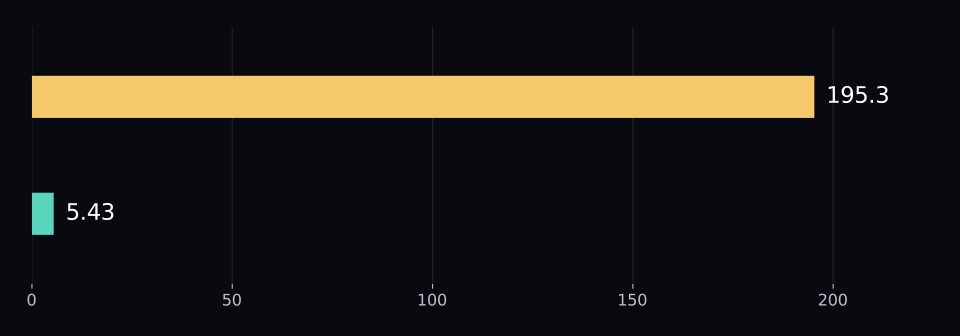
Our published conflict cohort contains 44 self-selected relationship histories with 2,994,932 messages. The median escalation rate was 195.3 events per 1,000 messages and the median repair rate was 5.43. The chart shows those two medians separately. Dividing them produces approximately 36:1; it does not mean that each relationship contained 36 arguments for every repair.
This study did not measure the prevalence of breadcrumbing, identify anyone as a breadcrumber or establish what an ex intended. It is included here because the guide distinguishes emotional contact from observable repair. Cohort selection, automated classification and missing off-thread context limit what the aggregate can establish. Your own conversation should be assessed against its supporting exchanges rather than compared with a hidden population cutoff.
Slow contact can become more dependable without becoming constant. A person may explain a constraint, propose an alternative and return to the conversation as agreed. Look at whether those explanations fit the subsequent behavior. There is no universal response time that proves seriousness, and there is no number of messages that establishes commitment. Assess the expectations you have discussed and whether they work for you.
Uncertain contact remains uncertain when a direct question repeatedly gives way to another affectionate opening. That observation does not require a personality label. You might conclude that the contact is pleasant but unsuitable for reconciliation, or that you need a clearer conversation before continuing. Those are decisions about the arrangement available to you. They do not require predicting whether the other person will eventually change.
Keep other explanations beside the observations. Work shifts, family responsibilities, illness, travel and different communication habits can affect availability. Ask what you know directly and what you are guessing. A stated constraint does not obligate you to accept an arrangement that leaves you unhappy; it simply belongs in the context. The aim is a fair account of the exchange, not a verdict based on response speed.
Choose the purpose of a reply before choosing the wording. You might want to know why someone reached out, discuss a practical issue or state that you are not reopening the relationship. Keep the message close to that purpose. Asking one clear question makes it easier to see whether the response addresses it. Sending several different requests at once can make an already confusing exchange harder to assess.
A request for clarity can name the decision you need without demanding a particular feeling. You can ask whether they want a concrete conversation about what happened, whether the invitation is a friendly catch-up or whether a proposed plan is still happening. Read the response alongside its follow-through. A reassuring sentence may answer an emotional concern while leaving the practical decision open; both observations can be true.
State a boundary in terms of your own participation. Say what contact you are willing to have, what you are pausing or what practical information you still need. You do not need to deliver an accusation or a research finding to make that boundary valid. If you have already communicated the same limit, further explanation is optional. A new affectionate message does not create an obligation to resume the conversation.
Use windows that contain the beginning and outcome of an exchange. Comparing the hour after one message with a full week after another can produce a misleading contrast. The relevant window depends on the actual question: a same-day plan, a future meeting or a discussion that both people agreed to revisit. Record whether the outcome occurred in text, in a call or in person, and mark outcomes you cannot verify.
An export may omit deleted messages, disappearing messages, voice notes and activity on other apps. A report cannot reconstruct those events from silence. If a conversation moved to a call, the text may show the arrangement but not what was resolved. Keep that limitation next to any conclusion about unanswered questions or failed repair. A finding becomes more useful when its supporting record and its gaps are both visible.
Participant mapping matters as much as chronology. Confirm which sender labels belong to you and the other person before reading a balance or follow-through finding. Do not let an app assign identity from tone or frequency. If names changed, multiple accounts appear or a group thread includes other people, resolve that ambiguity first. An accurate sequence attributed to the wrong person cannot support a fair interpretation.
Check that you have more than one exchange, that the relevant question or expectation is clear and that the record includes what happened afterward. Identify what repeats: renewed warmth, a specific unanswered question, vague plans, a boundary response or a return to silence. Then look for an exchange that challenges your first interpretation. A useful assessment should survive that comparison or become more cautious because of it.
Separate the observation, your interpretation and your choice. The observation may be that several invitations never became agreed plans. The interpretation may be that the contact keeps hope alive without offering the relationship you want. Your choice may be to ask for a concrete next step or stop participating in vague invitations. Only the first part needs to be established by the message record; you retain the right to make the choice.
Review the effect on you without turning it into a score for the other person. Does continued contact give you useful clarity, fit your expectations and respect the boundary you stated? Or does it repeatedly leave the same question open? You can decide that an arrangement is unsuitable even when the messages contain sincere affection. No analysis can make that personal decision on your behalf.
Export the conversation with sender information, timestamps and message order intact. Choose the guide for iMessage, WhatsApp, Instagram, Telegram or Android SMS if you need help preparing the file. Upload the supported export to Grey Mirror and confirm the participants when asked. Review the message count and coverage before relying on a finding, especially if your history includes several files or accounts.
Grey Mirror provides a completely free analysis with no credit card required. Read the findings against the messages that support them, compare repeated exchanges and keep any unavailable measurements visible. A full report is optional: $17.99 once, or one full report each paid month with Grey Mirror Plus at $9.99/month. Reports you unlock remain yours after cancellation. Start with the free analysis before choosing whether you want that additional report.
Consider an illustrative exchange: someone writes “I miss you,” you suggest meeting on a particular day, and the recorded conversation stops before they answer. The warm opener and unanswered invitation are two separate observations. Read the messages before that exchange and the next recorded contact before describing a repeated pattern. If the export ends at the invitation, later follow-through is unknown. If they return with another affectionate opener while the earlier question remains unanswered, describe that sequence directly. There is no universal reply deadline that turns one unfinished exchange into proof of breadcrumbing.
Keep agreed expectations beside the pattern. Did either person ask for regular contact, exclusivity or a specific next step, and did the other person actually agree? An expectation you hoped they understood is different from an agreement recorded in the thread. Someone can sound sincere while offering less contact or commitment than you want; the archive cannot establish whether that mismatch was deliberate. You can decide that the arrangement does not work for you without proving a hidden motive. A clear boundary might explain what contact you welcome and what you will do if the same unresolved sequence continues.
Review your own side of the exchange with the same care. Notice whether you also send warm messages without answering a question, withdraw after suggesting a plan or restart contact without acknowledging unfinished business. Compare what happens after a direct request for clarity, including whether both people answer and whether a concrete plan receives follow-through. Calls, meetings, work demands and other missing context may change the interpretation. You may ask for a clearer next step if you want further contact, or choose to stop replying. Neither choice requires a diagnosis. The cohort chart elsewhere in this guide describes communication measures; it cannot establish anyone’s private intent in this example.
Look for recurring warm contact without concrete movement, accountability, or stable follow-through. The disappearing pattern after contact is usually part of the answer.
Yes. An ex can feel real emotion and still create a breadcrumbing pattern if they keep re-entering without capacity for steady repair.
It compares the longer thread for intermittent access-checking, selective warmth, stable accountability, and repair signals.
Inspect the repeating sequence
Visual guide updated
An ex reopens contact with affection, memories or an invitation.
Look for a clear purpose and a practical plan rather than interpreting nostalgia as commitment.
Compare what happens after the invitation across multiple contact cycles.
Decide what contact you want now. The visible sequence can show follow-through without proving whether someone intends to keep you waiting.